Five Tips for Successful Self-Publishing

As someone who’s spent 30 years as a journalist, I find writing fiction immensely freeing. At work, much of my time is devoted to researching, fact-checking and rigorous editing: when I’m writing a novel, I can just make stuff up. Fiction gives you the freedom to create your own universe, populated with people who’ve sprung from your imagination.

That’s all well and good, but the truth is that there’s actually a lot of overlap between the two worlds, and acknowledging that is important if you’re going to write, and publish, something people are going to want to read. Here are five things I’ve learned.

1) Writing means rewriting

Every writer has their own way of getting from a blank page to a finished manuscript, but I guarantee they all involve more than one draft.

My method is to spend the first draft getting the story down, without spending too much time honing my prose. I then go back through it and rewrite thoroughly, sentence by sentence, looking out in particular for clichés, repetitions, redundancies and all the other hallmarks of bad writing.

After getting a second opinion (see below), I work on a final draft until I’m absolutely happy with every word.

2) A second pair of eyes

Even the most successful authors have their work scrutinised by an editor, and you should too. However talented you are, the chances are that your manuscript contains a few structural flaws, logical inconsistencies and characters behaving, well, out of character.

The trouble is, you’re too close to your own work to spot these things. So identify one or two trusted friends (preferably people who read a lot) and ask them to read your manuscript closely and mark up their comments.

This only works if you have an open mind. You might not agree with all their observations, and you’re free to ignore them, but you should at least consider them. If two people tell you your lead character, who you’ve conceived as a charismatic maverick, comes across as an irritating buffoon, maybe you need to look at him again.

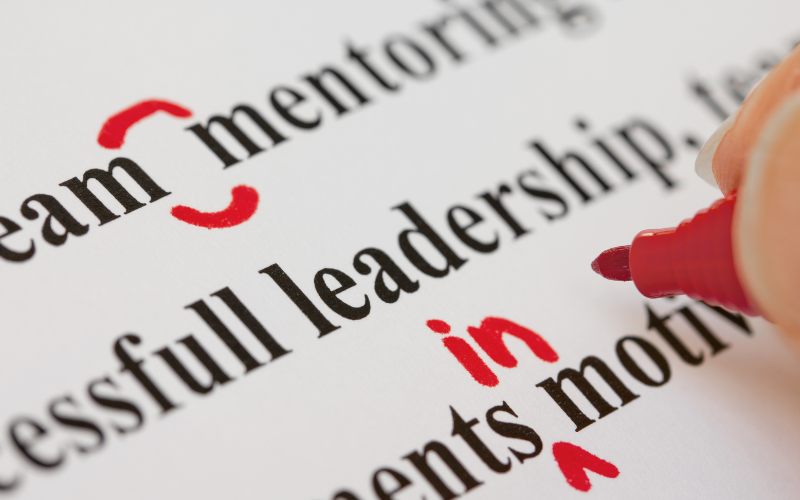
3) Use a proofreader

I’ve spent much of my career as a sub-editor, and I pride myself on my ability to spot a typo at 50 paces. But the truth is, no one can properly proofread their own work.

I learned this the hard way when I rashly failed to get my second novel proofed. At the launch party, I was halfway through a reading when I noticed a typo. I recovered my composure, but I’m still irritated by it today. Even if it’s the only spelling mistake in the entire book, it’s still one too many. It looks unprofessional.

So get your manuscript proofread. If you don’t know anyone with the necessary skills, it’s easy to find a professional who will do so for a modest fee.

4) Think about the package

When you self-publish a novel, you have to think about the bits that go round the actual story, the most important of which is the blurb on the back cover.

There’s a useful exercise that’s often recommended for aspiring writers; summarise the contents of your book in a page, then in a paragraph, and then in a sentence. It’s worth spending time doing this, as it focuses the mind on what your book is actually about, and what will attract readers to it. Use the results to write your blurb.

5) Don’t forget the cover

The most important part of the package is the cover – the first thing readers will see, whether you’re marketing your book online or in person.

I self-published my first novel through a US-based company: I simply uploaded my manuscript and they did the rest. The resulting cover was a murky abstract pattern that had nothing to do with my story, using a typeface I didn’t like.

So for my second book, I contacted a small company who specialise in book design. I met a designer, talked through a few ideas, and a couple of weeks later I had a front and back cover I loved. They also handled all the typesetting.

If you’re thinking, “I can’t afford to pay a designer”, fair enough – there are other routes. Maybe you know someone with a flair for drawing or photography who you could ‘commission’ for the price of a nice dinner. Or you could approach a local art college and see if they’ll set it as a challenge for their students. Just remember to credit their work.


Tim Turner

Tim Turner is Content Director at Wardour Communications and the author of two self-published novels.

Follow Tim on Twitter and LinkedIn.


2022

Read more: Five Tips for Successful Self-Publishing

Practical Career Development: editorial and commissioning skills

It is May 2022, and the Association of Learned and Professional Society Publishers (ALPSP) is running its first live training event since 2019, at the Bristol Watershed. Editorial and commissioning staff covering the humanities, social, environmental, life sciences, technology, engineering, medical and business are gathered after a two-year hiatus. It’s a full house of recent starters and early career professionals. The buzz is palpable and overwhelmingly positive. Their enthusiasm and appetite to engage, learn and employ newly acquired knowledge and skills is evident.

The purpose of the course

As a result of the global pandemic and ensuing lockdowns, new starters and early career staff had been unable to experience and access the physical workspace and its advantages. In-person support from peers or line managers, the inclusiveness of a shared office space and interfacing with colleagues in roles not directly related to their own, were lacking for many. The ALPSP Training Committee resolved to deliver a practical career development course that equipped early careers editorial and commissioning staff and those who were moving into a new position, perhaps their second job in scholarly and academic publishing. The course set out to address and distinguish internal communications from external communication; how to build effective relationships with colleagues and line managers, while accessing support and training. 

Remote working has brought challenges in building and maintaining successful external relationships, for example with editors, authors, and researchers, in the absence of attending meetings and industry events. Offices have since re-opened, but hybrid working practices are likely to continue for the foreseeable future, perhaps as the ‘new normal’. So how best to navigate your career development in this new work dynamic? 

ALPSP runs and manages 36 virtual training courses annually. We sought to compensate for lack of in-person training and development by offering this course as an in-person event. It was important that experienced publisher panellists could share their senior management experiences and decisions during the pandemic, and also draw on their careers. The panellists represented a large academic journal, books and conference proceedings publisher and a university press publishing books and journals in humanities, arts, and social sciences.

The event aimed to deliver five objectives:

  • How to prepare and conduct in-person meetings, conferences, hybrid events and campus (faculty) visits
  • Effective follow up
  • Communications and relationship management
  • Build your community
  • How to network productively

This is in keeping with ALPSP as a collegiate membership; sharing information and knowledge is key to the strength of the scholarly publishing community. Practical career development courses such as this act as an introduction to other professional development and career support that ALPSP provides to all professionals, whatever their career stage. This includes the ALPSP mentorship scheme to drive engagement and learning, proven and relevant training courses, member webinars and the ALPSP Careers Hub. The Careers Hub is a growing resource which provides essential introductions to a wide selection of topics across scholarly publishing and is highly commended. 

Five key take-aways from the day

  • You are not alone. From small group to whole room interaction with like-minded peers from similar career stages, the realisation that we face the same issues and experiences emerged.
  • Insightful, reassuring practical career advice by leadership in academic publishing on networking, commissioning across all publishing products including journals, books, and edited collections.
  • Rome was not built in a day. ‘Relationship building’ rather than the ‘intimidation’ of ‘networking’ is arguably a more appropriate expression of our career development and navigation. Build out your community on trust over time and with increasing confidence. 
  • Internal and external relationship building are equally valuable. 
  • Find a mentor or seek mentorship whatever your career stage.


Jeremy Brinton is Head of Sales: Education | Academic | Professional at Glassboxx, Trustee of The Book Trade Charity and a Training Committee Member – ALPSP.


For more information about similar events and other ALPSP training, visit the ALPSP website. You can also follow ALPSP on FacebookTwitter and LinkedIn.


2022

Read more: Practical Career Development: editorial and commissioning skills

Independent Publishing in Mid-2022: Five themes at the IPG’s Spring Conference

The Independent Publishers Guild’s 2022 Spring Conference in Nottingham on 8 and 9 June discussed a wide range of opportunities and challenges facing the independent publishing sector as we approach the second half of the year. Here are five of the most pressing issues raised by more than 30 speakers and several hundred delegates at the event, both in-person and online.

1. Costs

There is no escaping the mounting cost pressures on publishers at the moment. A panel session on the supply chain with David & Charles’ James Woollam, Clays’ Vicky Ellis and Swift Press’ Diana Broccardo highlighted steep increases in prices across paper, printing and distribution, and agreed that the problems would get worse before they get better. But the trio also suggested various ways to mitigate the rises, like staying close to supply-chain partners, shopping around for deals, avoiding reprints where possible, and reducing paper and print specifications. Raising the prices of books would be another way to protect profit margins, but another Conference panel agreed this was a tricky issue and carried the risk of damaging sales and partnerships with retailers. Educating readers about the value of books – especially compared with other purchases and forms of entertainment – could smooth the way for increases.

2. Communities

The event was the IPG’s first in-person Spring Conference for three years, and reminded publishers of the huge value of getting together in person to share ideas and experiences. The importance of community was picked up in a keynote speech from Ben Keene, the founder of the Rebel Book Club. “You can build a book club community around any niche you want,” he said. Specialist publishers including Jon Barton of outdoor adventure publisher Vertebrate highlighted the importance of getting to know their close-knit communities of readers and authors, while The Guardian’s media editor Jim Waterson emphasized the huge value of online social communities – especially TikTok, which has transformed the sales of many books in recent years.

3. Sustainability

The IPG has been closely involved in publishing’s efforts to make itself more sustainable, especially via the award-winning Book Journeys Project. The Project aims to increase awareness of environmental impacts in publishing and provides tools to help companies make informed buying decisions in print and production. Its next phase of research will look at ways to reduce the environmental impacts of returns and other ways unsold books are treated. The Conference also introduced a new toolkit to help IPG members on their journeys towards zero-carbon status. Social pressure is building on businesses to act responsibly, but several speakers acknowledged that good practice isn’t always cheap. “Producing books more sustainably requires extra cost, and we need to explain that to consumers,” said David Graham of BT Batsford.

4. Formats

The multiple formats available to publishers was a recurring theme of the Conference. Videl Bar-Kar of Bookwire showed how the audio market continues to soar, while Ingram Content Group’s Ruth Jones discussed how print on demand has opened up new possibilities for publishers. Several speakers noted that Covid lockdowns had increased the take-up of digital forms of content – especially in the academic and educational sectors. Amanda Ridout, chair of the IPG and founder of Boldwood Books, said her new business had a strategy of simultaneously publishing every new book in no fewer than ten different print, digital and audio formats, giving people the wide choice they demand now.

5. Metadata

The IPG’s events have always emphasized the importance of metadata to the visibility and sales of books, and the Spring Conference demonstrated the impact they can make. Kate Pearce of Phoenix Publishing House said good metadata practice had been a “gamechanger” for her new business, and Martin Klopstock of Kogan Page highlighted the helpful resources that are available to publishers from EDItEUR and BIC. “Metadata isn't as scary as you might think… don’t put it off,” Pearce said.

The Spring Conference also stressed the importance of good training and leadership as publishing deals with these and other challenges. 


Tom Holman

Tom Holman is the IPG’s Head of Communications

You can read more about the IPG’s Spring Conference via the #ipgsc hashtag, and see photos from the Conference in this Facebook album.


The IPG provides a wide range of events, resources and services to help independent publishers do better business. For more about its work, visit its website.


2022

Read more: Independent Publishing in Mid-2022: Five themes at the IPG’s Spring Conference

Is an MA in Publishing Worth It?

The MA Publishing course at the University of Derby was set up in 2016 by Alistair Hodge. Alistair had been running his own small press, Carnegie Publishing, based in Lancaster – but had spotted the lack of any Midlands-based publishing courses. There were (and still are) very good courses at universities such as University College London (UCL), Oxford Brookes, University College Lancaster (UCLan), and Stirling and Napier in Scotland, but nothing remotely local for any students who might be based in the East Midlands, West Midlands, or South Yorkshire.

The first intake of students arrived in September 2016 and I joined as Senior Lecturer in February 2017, having recently left my role as Publishing Director at Bloomsbury Academic. Having never worked in Higher Education before, I was immediately struck by the energy and enthusiasm of the students. What I love about teaching publishing at Masters level is that the students come from different educational backgrounds: as undergraduates, they’ve studied subjects as varied as history, journalism, creative writing, marketing, fashion, psychology, medicine, English and politics. What unites them, however, is a passion for reading, a love of books, and a desire to work in the industry in some capacity.

That desire leads to an interesting debate around our MA Publishing course at Derby (and at other courses around the UK): to what extent should our teaching be vocational and skills-based, as opposed to more “academic” and theoretical? There is no clear answer to that, as different students have different needs. Some genuinely enjoy the challenge of tackling marketing theory, book history, and of engaging with the growing body of scholarly literature in the field of Publishing Studies, while others are more focused on learning about the dozens of imprints at PenguinRandomHouse (PRH) or Hachette, getting to grips with using Nielsen BookScan, and becoming proficient InDesign users.

Choosing publishing as a career

When I interview applicants for the course (I do about 40 of these interviews every year, via Teams or Zoom), I’m struck by two things: the fact that no careers advisers ever mentioned the publishing industry to them at school or even during their undergraduate degree course; and how many of them express a desire to work in editorial. Young people who are seen as bookish, and who are avid readers, are often pointed in the direction of either teaching or creative writing – and they only stumble across the possibility of a career in publishing through their own curiosity about how books are made, or via bookish content on Instagram, TikTok or YouTube. And once they do start thinking about working in publishing, most applicants are initially drawn by the allure of reading manuscripts as editors (more often than not in their favourite genre of Young Adult fiction).

On the teaching team at Derby, we see it as a key part of our role to disavow our students of the notion that working in editorial is the obvious path to follow in publishing. (Despite the fact that I spent 21 years working in editorial, and obviously think it’s a great way to earn a living!) Our role is, as far as we can, to demystify the industry, to explain and define the many different roles and departments within it, so that students end up with a sense of the many options available to them – whether that’s working as a regional sales rep for an academic publisher, in a metadata role for a big commercial house, as a publicity assistant at an independent children’s press, or working in production for a university press.

The course and after

Studying for an MA Publishing degree is intense. (We hear this from our students all the time!) Because nobody has studied publishing at undergraduate level, we have to pack a lot of knowledge and learning into the first teaching term, and then consolidate and expand on that in the second semester. And when so many students have part-time jobs on top of their studies, it can become a crash course in managing deadlines, prioritising tasks, and coping with a seemingly never-ending workload: all of which are skills very much in demand in any entry-level role in the publishing industry. (Whatever one’s views on how realistic or sustainable those workloads are…)

However, the rewards for most MA Publishing students are, from what I have seen, worth it. Not all students who take these courses end up working in the industry. We have former students at Derby who now work for hotel chains, medical companies, even the police force – all doing interesting roles and making use of the transferable skills from the course. But for those students who do end up working at PRH, Bloomsbury, Oxford University Press, Taylor & Francis or Pan Macmillan, in whatever roles, they have forged lifelong friendships and connections which can help them as they grow in the industry.


David Barker is Senior Lecturer at the University of Derby, where he runs the Publishing MA course.

Connect with him on LinkedIn and follow him on Twitter @DavidBarker33.


2022

Read more: Is an MA in Publishing Worth It?

The Literary Consultancy (TLC)’s Festival of Writing and Wellness

‘Wellness’ has been a hot topic in the media, and on social media, recently – particularly in the wake of the coronavirus pandemic and lockdowns. It feels as if everyone is exhausted, and lacking in motivation and creativity. A recent survey from The Bookseller reveals that publishing is facing “industry-wide burnout” – with 89% of staffers reporting experiencing stress, and 69% burnout, during the course of their work over the last year.

TLC’s mission is to support writers at all stages of their professional development. So, when planning this year’s summer event, we looked for a way to remotivate writers. Thus, the Being a Writer Festival was born – to help writers be creative, feel well and thrive.

The Being a Writer Festival puts wellbeing and creativity at its heart, focusing on how to write well and feel well. It will provide writers with an event series that allows them to develop their writing craft and learn more about the publishing industry, while gaining ideas on how to really look after themselves, as they write.

Research-backed sessions, designed to inspire

The Festival programme embraces the themes and findings of Being a Writer, TLC’s membership community platform. The platform is designed to help writers sustain and protect their creativity and cultivate resilience in a range of settings. It spans events, interdisciplinary learning, research collaboration, podcasts, and digital content – including monthly writing clubs, workshops with inspiring tutors, prompts and courses hosted on the platform itself.

This content has been inspired by TLC's founding psychoanalytic principles ('Is There Anybody Reading Me', 1999, available as a free ebook), and our work as consulting partners on academic research into barriers to writing, including the Royal Society of Literature ('A Room of My Own', June 2019) and Kingston University ('What Makes A Writer', May 2019).

The central concept of these principles and research is that, in order to develop and flourish, writers need to have their work taken seriously by a sympathetic editor who gives constructive, objective advice. TLC also acknowledges the role of the publishing industry in this process, and that finding an audience (of any size) is a challenging goal for many writers.

In a world where competitive industry standards mean that the focus is often on what is written, Being A Writer instead helps writers understand why they write, and offers creative and practical solutions to help them to keep going.

The festival is structured to fit into the busy lifestyles of the writers we work with. Zoom fatigue is real, and overwhelm and burnout seem to be affecting many people, so moving away from a condensed format into one that gives writers more space to breathe between events, felt logical.

A stellar line-up of speakers

When choosing the speakers for the Festival, it was important to achieve a balance between the writing and wellbeing elements. With a wealth of talent to choose from, we were delighted to secure sessions with some top speakers. For example, professional psychotherapist Dawn Estefan specialises in therapeutic work with creative minds. Poet and creative facilitator Khairani Barokka will lead an interactive workshop to help develop better creative habits. Novelist and activist Nikesh Shukla will give a keynote on ‘How to Be a Writer’.

A Festival for anyone who wants to write well and feel well

The Festival is not just for members of our Being a Writer platform, but for anyone who wants to develop their writing craft, write well and feel well. You’ll learn tips and tricks to maintain a creative mindset as you write, and to live more sustainably and consciously as a writer, reader, and human being. Discover more about the author journey and the state of the publishing industry from demystifying sessions with publishers, agents and authors, and a roundtable with debut novelists. Even if you’ve never picked up a pen before, we think you’ll get a great deal out of the festival programme, to reawaken your creative self.


Joe Sedgwick is the Head of Writing Services at The Literary Consultancy.

Follow him on Twitter, @JoeSedgwick20 or @TLCUK. 


The Being a Writer Festival runs from 20 June to 21 July 2022.


2022

Read more: The Literary Consultancy (TLC)’s Festival of Writing and Wellness