First Impressions of London Book Fair

First impressions of London Book Fair

As a lifelong book lover set on working in the publishing industry, I have wanted to attend the London Book Fair since I stepped on the career ladder. This year I finally had the opportunity to attend – and I hope it’s the first of many visits to come! Being one of the world’s largest and most influential publishing trade events, London Book Fair brings together thousands of professionals and celebrates books across all formats – so I knew it was a place I needed to be.

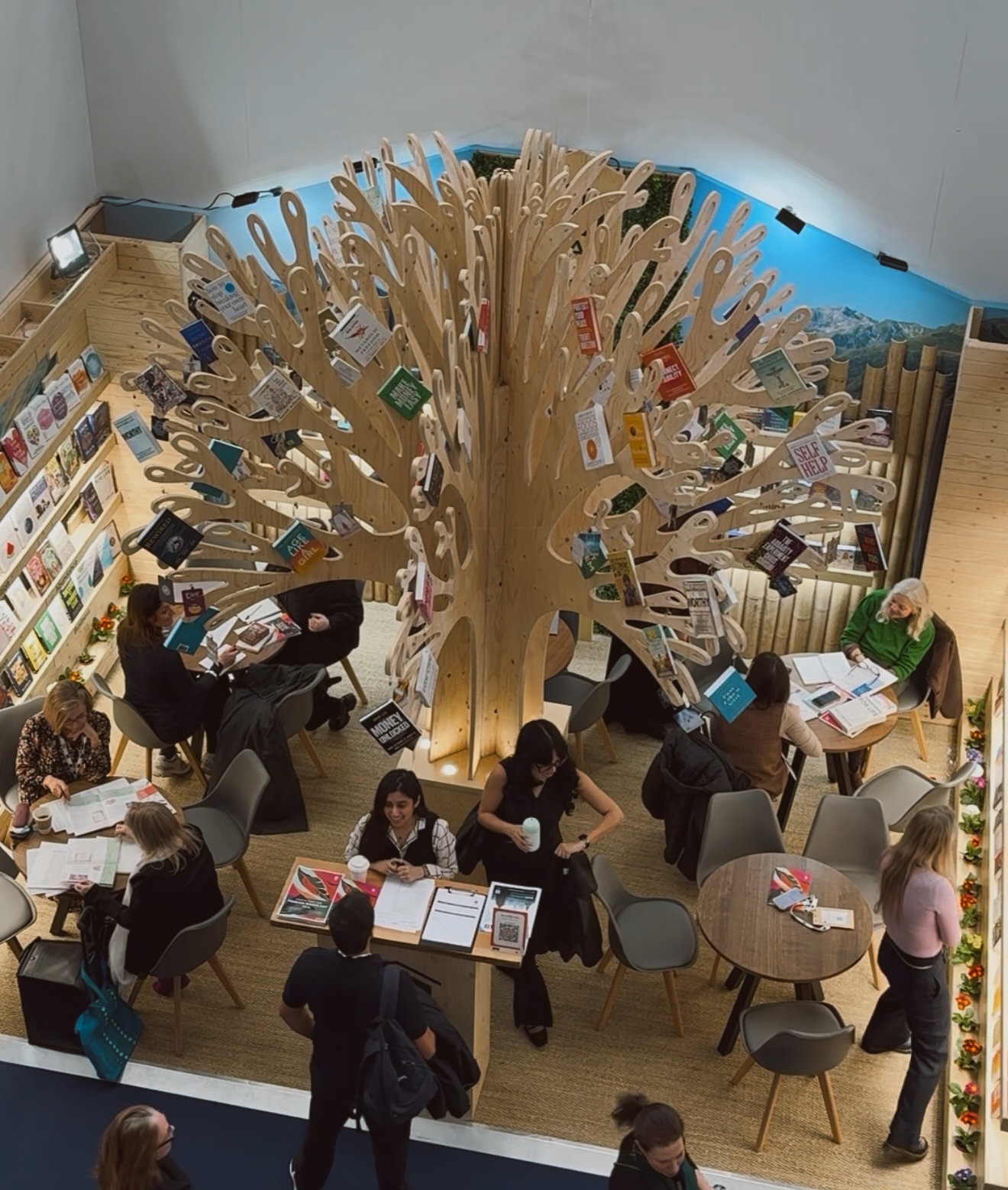
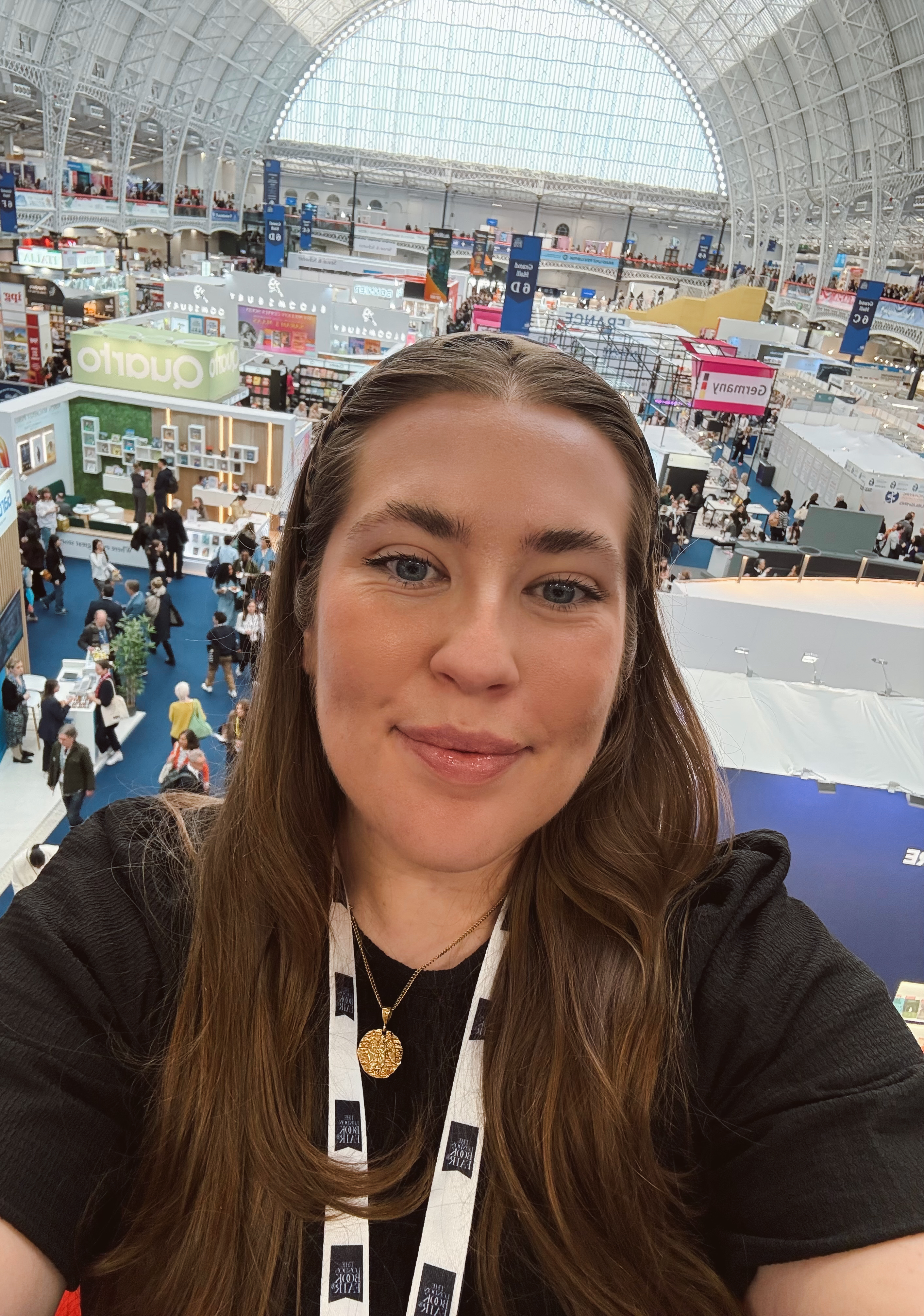
My initial reaction was one of awe. The moment I walked into the main hall I was greeted by the hustle and bustle of the event. The lively energy was captivating and made me all the more excited to be there. We headed straight upstairs to look down over the room and get the full picture. Admiring the view, I knew I was in the right place. Everywhere I looked there were elaborate stands, huge book displays, active meetings and smiling faces. To be surrounded by people who all share a love of books and care about the future of publishing, in a grand venue with books at its heart, was instantly inspiring. Leading up to this day, I was eager for further exposure of the publishing industry, and I was excited to attend a trade event – and it’s safe to say, there was no better place to start.

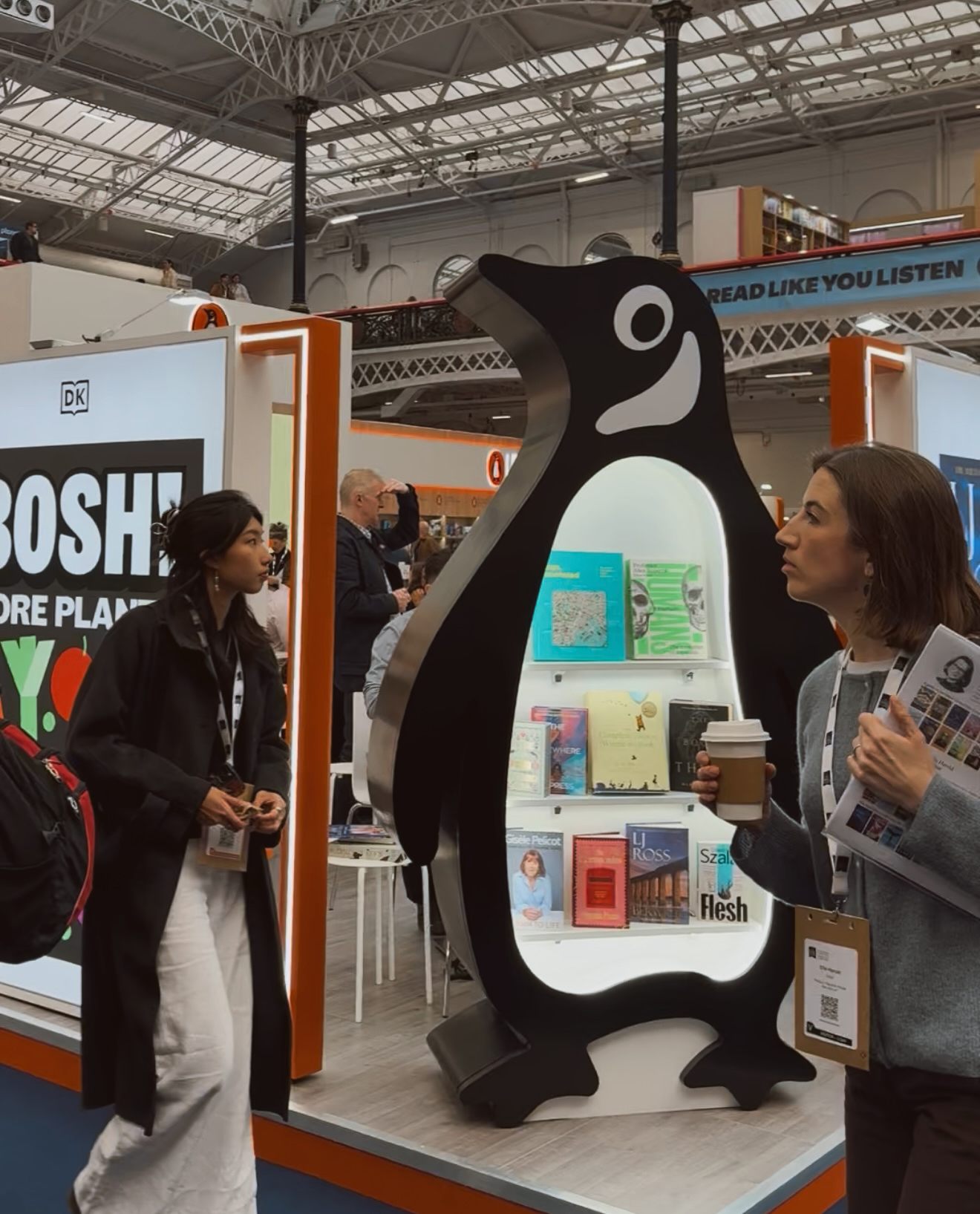
Did the event meet my expectations? Absolutely! Although I only went for one day, it was jam-packed and I enjoyed every minute – though, I’m glad I listened to everyone’s top tip to wear comfy shoes. There weren’t many places to sit and take in the event or unwind between talks, which is something I hope will be improved in the future. Walking among all the stands, I was excited to see books I’ve read and huge images on posters of some of my favourite authors – it was a book lover’s dream. I couldn’t stop admiring the displays, like a wooden tree with books hanging from its branches, a huge penguin bookcase (at, of course, Penguin Random House’s stand), and a wall full of Wordsworth’s gorgeous classic editions. There were stands across all genres, countries and publishers – each unique in their offering, but all with a shared passion of books.

With so much happening, I was glad we planned ahead. We scheduled in a few meetings and chose the talks we were interested in seeing in advance. It was great to meet other professionals and, as someone early in their career, it was inspiring to chat with those who had been working in the industry I had aspired to enter for so long. Everyone was so friendly, and it showed me that, although the industry is competitive and hard to get into, the people are lovely and passionate about what they do.

In my excitement, I printed off a map in preparation for the day. I didn’t end up using it though, as the fair was easy to navigate, staff were on hand to point you in the right direction and there was a huge map in the entryway. I also wrote down the talks I had most interest in attending, so I wasn’t overwhelmed on the day and risked missing one I hadn’t known was on. It was a shame, however, that there were often talks happening at the same time – so I had to choose, rather than get the opportunity to see them all. But it’s understandable with so much going on in the space of three days!

How to Survive and Thrive in a Post Search World and How Technology Will Reshape Publishing Over the Next Five Years were both insightful talks and raised interesting questions about AI in publishing. They definitely got me thinking about how no one knows for sure how much impact AI will have and where. It was positive to hear people talking about how AI was mainly there to optimise processes, rather than take away human creativity – which I really hope will be the case. These talks were more relevant to my current role, but as a book lover and writer, I enjoyed seeing the Creative of the Fair, author Alice Oseman, talk about her bestselling graphic novel series Heartstopper, her journey to being published and more. Each talk offered something different – a new perspective, unique idea or conversation starter that I took away for later.

With so much to see and do, I’d love to go for longer in the future. But for a first visit, one day was a great introduction to what’s on offer and what to expect. I really look forward to creating more connections and meeting more professionals in publishing – because the fair helped confirm that this is an industry I want to be a part of for a long time.


Chloe D'Inverno


Chloe D’Inverno is Marketing Executive at the PTC. You can connect with her on LinkedIn.


How The Publishing Post Helps People Break into Publishing Careers

How The Publishing Post Helps People Break into Publishing Careers

When I launched The Publishing Post in June 2020, I felt that, although there were many great resources in publishing, they were often expensive or linked to networks that felt inaccessible to those starting out. I was a first-generation university student from a lower socio-economic background, and had been working part-time to complete my degree. I didn’t have spare income for extra learning opportunities. I also found myself caught in the cycle of needing experience to get experience, as many publishing hopefuls do. For me, launching the magazine as a free resource was very important. We have since moved to an annual £5 fee to cover running costs, but I want the platform to be as accessible as possible.

Industry resources at The Publishing Post

The Publishing Post is a platform hosting over 3,000 articles on everything from publishing news to children’s publishing, the hottest trends across the industry to audiobook recommendations. We have articles for every part of the industry and explore all roles available. With an audience of over 20,000 social-media followers and over 500,000 views to date, we are always looking to teach our audience something new. It is also important to all of those who work on the team to ensure that we are championing inclusivity and diversity across the literary landscape, sharing our favourite books written by authors from underrepresented backgrounds, initiatives that progress the industry and books which speak to our values.

In addition to knowledge, the platform also offers hands-on experience to those looking to break into the industry. With roles for volunteers across writing, editorial, production and social media, there are lots of ways for hopefuls to gain publishing-adjacent experience and demonstrate their passion to employers. Since its inception, The Publishing Post has offered experience to over 500 aspirants and typically maintains a team of around 130 members at any one time, producing 80-plus articles each month for the site.

Advice on skills

Upskilling articles are one of The Publishing Post’s most popular type of content. These help readers build practical knowledge and skills in different parts of the publishing industryhelpful for those who have yet to decide their preferred route. For example:

  • “Upskilling for the Production Department” explains how the production team functions (from printing to binding, project management to budgeting) and what technical and organisational skills are useful in a production assistant role.
  • “Upskilling Tips for LDN Apprenticeships: Publishing” shares tips for apprenticeship-entry into publishing.
  • “How the Publishing Training Centre’s E-Learning Modules and Publishing Starter Kit Could Help You” reviews The PTC’s training resources and how readers can use them to boost practical skills.

Within each upskilling article we are looking to share new information with our readers, whilst also showcasing roles and areas which are often not the most obvious choice. For example, sharing articles on departments like licensing or audio, in addition to editorial. Each article covers the department or role: what it is, how it fits into the publishing process, what day-to-day looks like, as well as tips or skills that readers can focus on in this particular area.

Supporting our audience of readers is a key pillar of The Publishing Post, aiming to contribute to shared knowledge, career progression and network building. The site not only hosts articles but also has a job board and recordings of previous events in collaboration with publishers like Bonnier Books. The Publishing Postis a co-creator of the First Chapter Award with the Society of Young Publishers (SYP), aimed at those who often go unrecognised in traditional trade awards, such as publishing hopefuls, volunteers, booksellers, librarians and freelancers. It seeks to celebrate individuals who have demonstrated passion, teamwork and dedication to the industry, as well as their own professional goals. Our subscribers are not passive consumers of our articles, but actively participate, building knowledge and skills, accessing roles, and ideally move from hopeful to employed within the industry.

What the future holds

Looking ahead, The Publishing Post aims to further support this community with our content and growing platform. In 2025, we began offering CV and cover-letter feedback. This has been really brilliantly received by those who often find themselves questioning their approach to applications. We also look forward to the growth of the First Chapter Award and seeing how it positively affects the careers of its winners. Having been available for just over five years, we are moving from start-up phase to a more structured, consistent organisation. With that, I’m excited to explore further opportunities to open up the industry, from working with schools to reach people earlier, to running more events and opportunities for the community to come together.


Chelsea Graham


Chelsea Graham is Senior Editor, Audio, at Bonnier Books UK and Founder and Editor in Chief ofThe Publishing Post.

You can find out more at www.thepublishingpost.com, or on Instagram, LinkedIn, X, Threads and BlueSky.


My Journey into Publishing

My Journey into Publishing

Like many people in the industry, my interest in publishing started with my love of books. I’m a firm believer that the right book has the potential to change readers’ lives, and I wanted to help people find that book. After a Publishing MA at Kingston University, I started at Facet Publishing as Sales and Publishing Officer and, today, I’m Sales and Marketing Manager.

However, getting into the industry is not easy. It can be draining to receive rejections (or lack of answers entirely!), especially when you don’t know what you’re doing wrong. What helped me overcome rejections was keeping busy by volunteering in publishing-adjacent companies and cultivating my literary interest, having a blog and starting social media.

I would recommend applying for jobs that you might not have considered or that you don’t believe to be a perfect fit, because you might end up being the right candidate. Roles and departments in publishing are varied, and some are rarely talked about, such as rights or audio; research these and see if your abilities align. Consider publishers beyond well-known names and trade; academic publishers are often lesser known, as are publishing divisions within other companies. So, keep an open mind: the industry is vast, and you never know where you might find a home!

Landing my first job

Today, I know what helped me most was doing industry placements through my MA. On placements with The Bookseller and literary agencies, I built practical skills and networked with professionals, other students and publishing hopefuls. It was during my internship with the Carnegies that I met the Facet Publishing team. By taking time to network and show them I was a good candidate, I was hired when a role opened. When you are given an opportunity to impress people who might hire you or recommend you, make the most of it!

Tips and tricks from the inside

If you’re looking to do an MA in publishing, I would recommend seeing what the university offers in terms of placements or mentorships. However, while further study opens doors, it’s not for everyone. I tried other ways to make myself a stronger candidate, such as:

- LinkedIn Training: when preparing for interviews, I found that I could build my skills in advance and prepare for tasks. For instance, if you’re applying for sales roles, it’s useful to look at their Excel courses.

- Social media: particularly for marketing roles, it can be good to demonstrate that you can grow an audience, such as increasing your LinkedIn connections.

- Recruiters: these host career advice and advise on successful cover letters and CVs. Some offer to review your CV and have interview practice. It can be difficult to show your value and passion, so it’s helpful to have outside assistance.

- Volunteering: the Society of Young Publishers (SYP) and The Publishing Post are run by volunteers and are a great way to learn new skills and more about publishing. Some literary festivals or conferences look for volunteers; they enable you to keep up with the industry, meet new people and demonstrate your interest, especially outside London. And there are charities, like the Children’s Book Project. I was previously the London Mentorship Officer and it allowed me to meet new people in the industry through events and the committee.

- Demonstrating your interest: new starters in the industry aren’t expected to have all the skills but employers want to see passion. There are fun things you can do, such as starting a book club or a blog about books!

- Keep updated: sign up for daily updates from The Bookseller or Publishers Weekly and follow publishers on social media. The Bookseller hosts a jobs page and free weekly jobs email.

- PTC: having taken many courses with the PTC, it is a great way of learning publishing-specific skills.

- Internships: big publishing houses open internships on a yearly basis, so it’s good to keep an eye out for these.

- BookCareers offers all-age career guidance specific to publishing.

Our industry is about networking, so I would recommend finding ways to meet people. These include:

- SYP: the Society organises events that teach practical skills and allow you to network. For instance, SYPLondon runs a yearly ‘Speed-dating’ event to meet industry people and learn about their jobs.

- Mentorships: various organisations, including the SYP, offer mentorships for publishing hopefuls and are great opportunities to meet someone from the industry.

- LinkedIn: it’s a good place to meet people and stay updated. Most of the time, publishing workers are more than happy to help or answer any messages.

There are many ways people enter our industry; everyone has their story. However, if you keep at it, try building your skills through internships and volunteering, and make the most of your connections, I’m confident you’ll find your place. Good luck!


Tara Hiralal


Tara Hiralal is Sales & Marketing Manager at Facet Publishing. She was a 2025 Printing Charity Rising Star and is currently London Mentorship Officer for the Society of Young Publishers. You can connect with her on LinkedIn.


The Book Trade Charity: Supporting the People Behind the Pages

The Book Trade Charity: Supporting the People Behind the Pages 

The Book Trade Charity (BTBS) is the UK’s leading welfare charity supporting people who work – or have worked – in the book industry and their families. Since 1837, it has provided practical help, financial assistance and housing to individuals facing hardship across publishing, bookselling, printing, distribution, literary agencies and beyond. Quietly but consistently, the charity acts as a safety net for people within the book world and a springboard for those starting out in the world of books. 

Making a difference: grants in action 
Last year, the charity awarded £276,206 in grants to 177 beneficiaries following 298 applications, helping book-trade families in crisis. From covering household bills, essential furniture and medical aids, to redundancy support, travel and housing needs, BTBS’s grants make a real difference. We also helped 19 new entrants to the trade and provided 61 home and household grants, ensuring that people can stay safe, supported and in their own homes. 

A community that gives back
We are incredibly grateful to the individuals and companies from across the book trade who champion our work. An increasing number of businesses are joining our ‘Annual Giving Programme’, committing a yearly pledge to help fund vital services. Thanks to this generosity, we now receive over £200,000 each year from corporate donors. We also welcome one-off and regular donations from individuals, whether through payroll giving or directly via our website.

A long history of care 
Originally created to help widows and orphans of those in printing and bookselling, the charity’s principle remains: the people who bring books into the world deserve security, dignity and support when life becomes difficult. Today, the charity cares for individuals at every stage of their working life – from early-career colleagues to retirees – as well as their partners and dependants. 

Assistance is available to anyone who works or has worked in the UK book trade, including publishing, bookselling, printing, literary agencies, distribution and freelance roles. The charity helps people facing a variety of personal challenges including, but not limited to, illness, disability, caring responsibilities, domestic abuse, bereavement, redundancy, rising living costs and housing insecurity. 

Our grants 
Financial assistance includes emergency grants, regular monthly support for those on low incomes, and help with essential household costs. These are delivered with discretion and compassion, helping people stabilise their lives without stigma. Each application is confidentially reviewed by a panel, and the charity uses the Joseph Rowntree Foundation’s minimum-income guidelines to ensure consistency and effective means-testing for all applicants. The process is straightforward and often starts with a chat. 

Emilia’s story 
Emilia reached out to BTBS after fleeing domestic abuse with limited savings and critical debts looming. The charity helped Emilia cover essential bills during this time. We are so grateful to her for sharing her story: 

“I cannot express enough gratitude for the incredible support I received from The Book Trade Charity during one of the darkest times in my life. They helped me cover bills, gave me stability to continue working, and supported me emotionally. Knowing someone truly cared gave me hope and reminded me that kindness still exists. I am now in a safe, affordable home, close to work, and slowly rebuilding my life. I will forever be grateful for their compassion, generosity, and care, which gave me the strength to keep moving forward.” 

The people we help
Our applicants come from all walks of life and span every age group. We assist young people entering the trade with housing and relocation assistance, while also helping working-age colleagues and their families when life takes an unexpected turn. Our support extends to retired colleagues too, ensuring help is there whenever it is needed.

Housing and community 
The charity also offers housing in Hertfordshire and London, giving residents a chance to live independently while being part of a book-trade community. The Retreat in Kings Langley provides self-contained accommodation for over 30 people needing housing for social or economic reasons, with trains providing regular connections to Euston station in central London. Bookbinders Cottages in Oakleigh Park, north London, caters to 25 young people starting their careers alongside older residents. The new development is only 30 minutes from the centre via public transport. 

Patsy, a long-term resident, shares her thoughts: 

“I've lived at The Retreat for 18 years. It's a quiet, peaceful place with a close-knit community. Staff are always helpful, and repairs are dealt with promptly. I really wouldn't want to live anywhere else.” 

These homes provide not only accommodation but also a continued sense of belonging for people who have often dedicated their working lives to the book trade.

A quiet force for good 
Working quietly and confidentially, BTBS delivers real impact. Each year, hundreds of individuals and families receive financial relief, safe housing and renewed stability. In an industry built on stories, The Book Trade Charity protects the real people behind the books – the editors, designers, printers, sellers, packers, drivers and freelancers responsible for bringing those pages to life. When life hits, the charity ensures that no one in the book trade faces hardship alone. 


Vic Perry


Vic Perry is Chief Executive of BTBS. For more information and to support BTBS’s work, visit www.btbs.org or contact her on

To find out about BTBS’s grants or vacancies at The Retreat and Bookbinders Cottages, contact Glenda Barnard, Operations Director, on 01923 263128 or .


What Impact is AI Having on Publishing Careers?

What Impact is AI Having on Publishing Careers?

On 4 December 2025, the PTC ran a webinar with speakers from academia, a publisher and recruitment, about the impact AI is having on the industry. Below are key points from the event transcript.

What brought you to AI?

Angus Phillips (AP): I've been interested in it for a few years. The students are really interested in the topic now, and many are doing research projects around the use of AI.

Suzy Astbury (SA): As a recruiter, we are talking to businesses about their talent needs, and the skills that they need for their business. How do we embrace AI into our jobs, so that our candidates remain relevant?

Sara Lloyd (SL): In my role as Global AI Lead, I'm looking after four main areas in AI: our strategy; governance and ethics; facilitating innovation and change; and stakeholder engagement.

What impact is AI having on publishing jobs at the moment? 

SA: Not every role being recruited is demanding AI skills, but the larger organisations are testing at interview for some skills. We call them “power skills” – they are also known as “soft skills”, like curiosity, adaptability and resilience. Also, the appetite for change, because the landscape is one of change. If we're hiring anybody, we want to make sure that they're going to be part of that, and not the other way.

In terms of departments, it's everywhere. A lot of people know about generative AI, the large-language models (LLMs), ChatGPT, Copilot. In Marketing, we have new skills like GEO [Generative Engine Optimisation], which is like SEO [Search Engine Optimisation], but its focus is on coming up in searches on LLMs.

SL: It has the potential to touch every role, and should be touching every role. Anyone in any role should be engaging with this topic, if they're going to future-proof themselves as a talent that people may want to buy, whether freelance or in-house. The current impact of AI is automation, optimisation, personalisation and making the publishing process faster, more efficient and more data-driven. Becoming more data-orientated is something I would recommend people do.

AI will enable us to be marketing books all the time, including 7,000 books on the backlist. On the production and operations side, it's streamlining. It can improve outcomes, reduce costs, being more efficient and sustainable in how much we print, how much we warehouse, or using automation for boring manual labour, like asset tagging, or generating alt text, or formatting EPUBs.

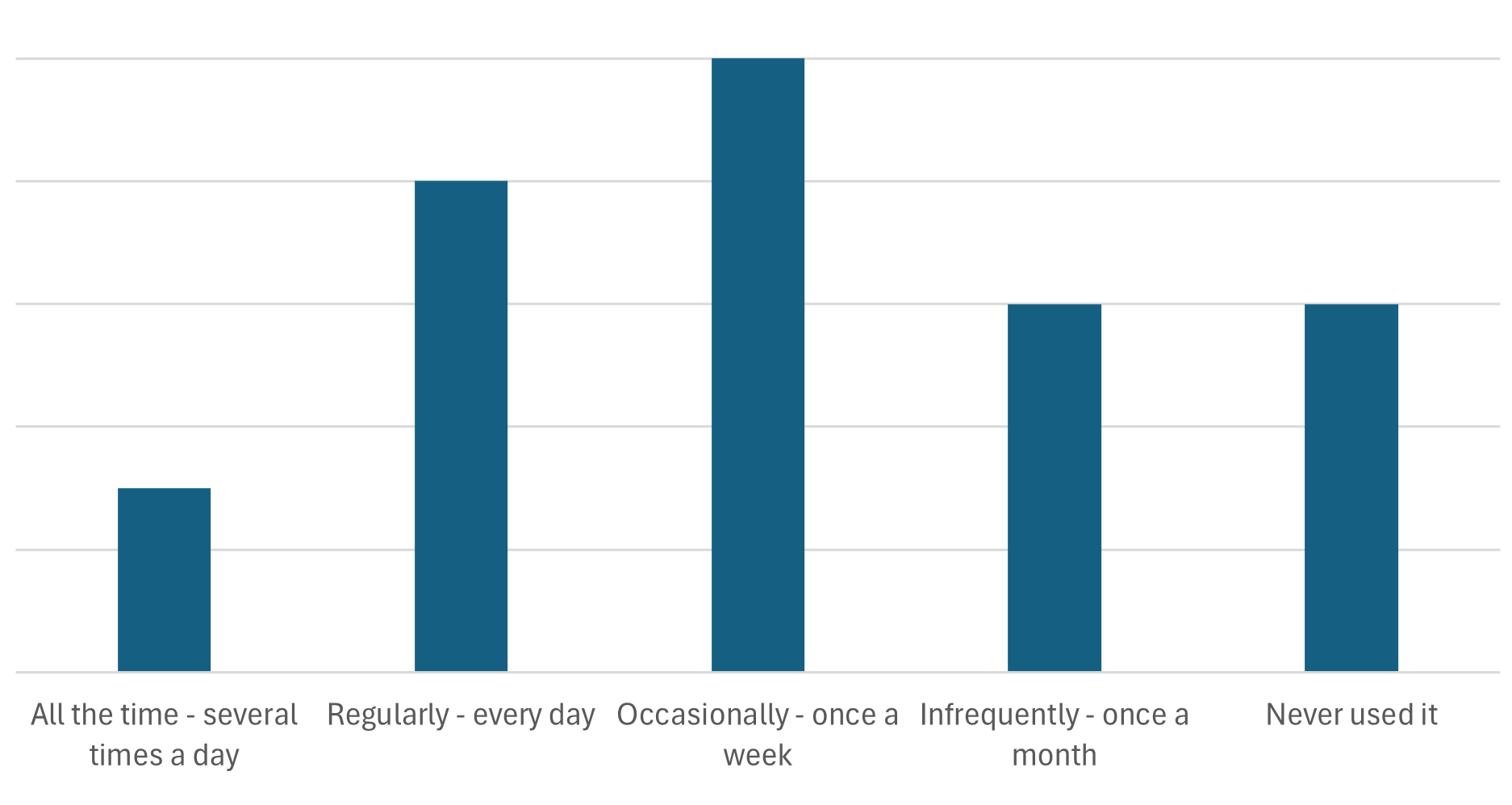
Audience poll: How often are you using AI?

How can people work with AI and use it to help themselves and the organisation?

SL: Everyone's looking for flexible, adaptable people who are open to change, who are comfortable with uncertainty, and are ready to lead the charge. It's thinking about the way that you can best use your expertise, your experience to apply to outcomes from the tools that you'll be able to use. So you need to understand what are the tools good at, but also where are they not delivering? Where do you need your human skills to kind of counterpoint what the tool can produce? What could you do if you now had an army of your own assistants, what other capabilities could you add that supplement your own, or what more could you do? What more creative things could you do?

What do you advise people who are trying to get into publishing, or want to up their AI profile?

SA: Once this moment has passed, AI will become invisible. It'll be part of the infrastructure; you won't even know that you're using it. So this is the perfect moment to stand out and elevate your career. And then to break it down into things that AI is going to change, like all those assistants, they're task-based parts of our role. Which will make our roles so much more exciting to enable us to be much more human, much more creative.

In terms of how do I get into publishing? It's still incredibly hard, but, understanding where the industry's heading, and being able to speak about that, is a good start. It's leaning in, it's coming up with ideas.

AP: You've got to think of it as a possible competitive advantage, this is an opportunity, and you need to get ahead of other people: having a think about it, sign up to the newsletters, find out what's going on, not just the newsletters in publishing, but also from outside too. Don't get overwhelmed by what's going on in AI, but get an understanding of how it's affecting media industries, what the impacts are. Talking to publishers, project management skills are really important. If you can boost your project management skills, they're really going to apply to AI.

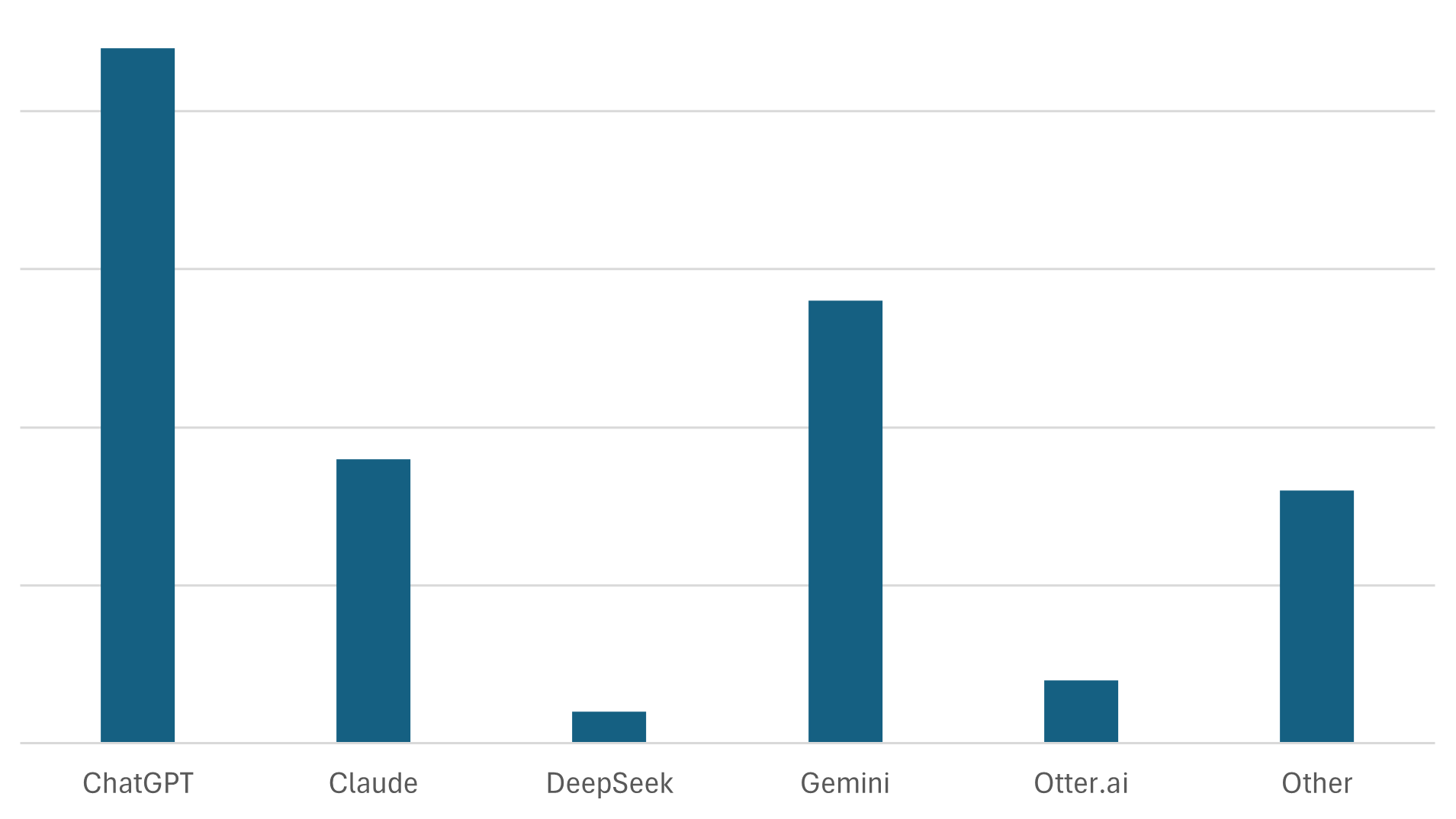
Audience poll: Which AI tools are you using at the moment?

What new jobs and opportunities is AI going to create in publishing?

AP: There will be jobs for content managers, project managers, people thinking up new ways of using this technology. And you think about how AI can look at 8 documents and summarise them. What does that mean for learning? How is it going to help an individual student? It is a question of having that mindset to think laterally and be willing to see the possibilities around AI.

SA: There will be a greater need for really brilliant line managers. Because if AI is going to be very task-led, we're going to need better line managers to manage the humans as well. How do we stand out as a candidate with AI? Make sure you are discoverable. There are new job titles and skills on LinkedIn that you can tag on your profile and include on your CV.

SL: Let's get creative. What could be the things what entrepreneurial things could we do now? What new products and services could we create? The role I think that's nearest to what Angus was talking about, I call “Synthetic Media Producer”. What I mean is overseeing the creation of AI-generated content, or pulling together things across bundles of products, or ways that people can interact with content in different ways, particularly in the learning environment, and perhaps the business environment, too.

AI is extremely good at working with and crunching big data, but there will be new data roles as well, or newly evolved data roles. They'll be working out the insights, what are the what-ifs?

We're going to need many more people who understand ethics, bias, the law around AI, and how to manage all of that. Reviewing AI systems and content outputs to ensure fairness, understand cultural sensitivities, prevent bias in recommendations or screening. And training roles. We're going to need more and more digital transformation trainers sitting alongside businesses, working for businesses, working within businesses.

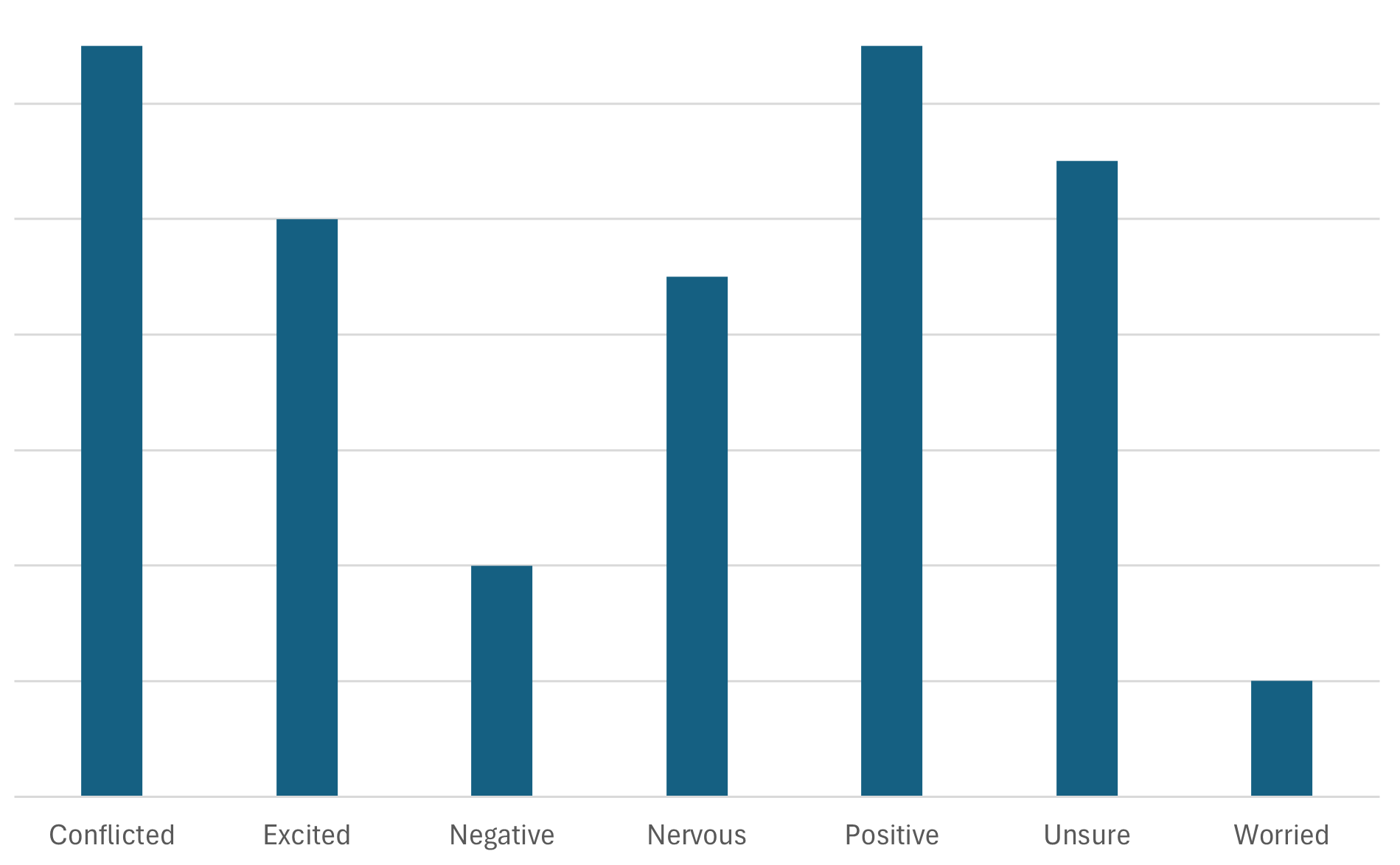
Audience poll: How do you feel about AI with regard to your career?

How do you feel about AI?

SL: It's fine to feel worried, to feel conflicted. It's important to acknowledge that. I worry about the downsides of AI in its broadest sense. The way I try to handle that is to acknowledge the feelings, and to recognise that feeling those feelings is okay, and then to move beyond that, and to come to grips with it's here to stay, and I'd rather be the person who is grappling with it and trying to work out what might some solutions be. Because the conflicting bit is often to do with the fact that AI is not bad on its own, it's that some bad people might use it in bad ways. There's nothing intrinsically wrong with AI. So it's trying to take a little bit of agency and ownership, and think, well, I'm going to make my decisions about where I want to use it, and how I want to use it.


The Panellists


Suzy Astbury

Chief Executive Officer, Inspired Search and Selection


Sara Lloyd

Group Communications Director and Global AI Lead, Pan Macmillan


Angus Phillips

Director, Oxford International Centre for Publishing, Oxford Brookes University


Recommended reading and links